Curated Ears and Sculptural Flow: The Architecture of Multi-Piercing Placement
The Auricular Blueprint and Intentional Design
A refined multi-piercing composition begins where arbitrary stacking ends. The objective is not to accumulate metal across the ear, but to create a disciplined visual system in which every stud, hoop, and articulated detail has a role. A successful arrangement establishes hierarchy, directs the eye, and remains convincing when viewed from the front, side, and three-quarter angle. It is closer to architectural planning than spontaneous accessorizing.
The ear is a compact piece of cranial terrain, shaped by ridges, hollows, projections, folds, and soft tissue. Its topography changes dramatically from one person to the next, which means the same constellation cannot simply be transferred from one ear to another. The Andromeda approach treats placement as celestial mapping: each piercing occupies a deliberate coordinate, while the negative space between points creates the atmosphere in which the design can breathe.
Mapping Cranial Topography and Tissue Thresholds
Anatomy sets the first boundary. The lobe is composed primarily of soft, vascular tissue and generally offers a more forgiving environment for piercing and healing. Cartilage zones are different. Auricular cartilage has comparatively limited blood supply, so swelling, irritation, pressure, and accidental trauma can persist for longer. This is why a lobe piercing may heal in roughly six to eight weeks or longer, while many cartilage placements require six to nine months, with especially demanding projects sometimes taking up to a year.
Healing time is not a fixed appointment on the calendar. It depends on tissue thickness, jewelry fit, sleeping habits, hair and headphone contact, aftercare, and whether several cartilage piercings are healing simultaneously. The flat helix, conch, rook, tragus, and daith each present distinct angles and pressure patterns. A professional piercer must evaluate the ear at rest and consider how the tissue changes when the wearer sleeps, wears eyewear, uses earbuds, or places a phone against the ear.
Sensory mapping deserves equal attention. The auricular region is served by branches from several nerves, and variation in cervical nerve pathways means that a placement plan should never treat the surrounding skin as uniform. Research examining cervical plexus anatomy found variable relationships involving the lesser occipital nerve, greater auricular nerve, and spinal accessory nerve. That work, discussed in research on cervical plexus abnormalities, reinforces a practical principle: anatomical variation is real, and pain or unusual sensitivity should not be dismissed during a piercing consultation.
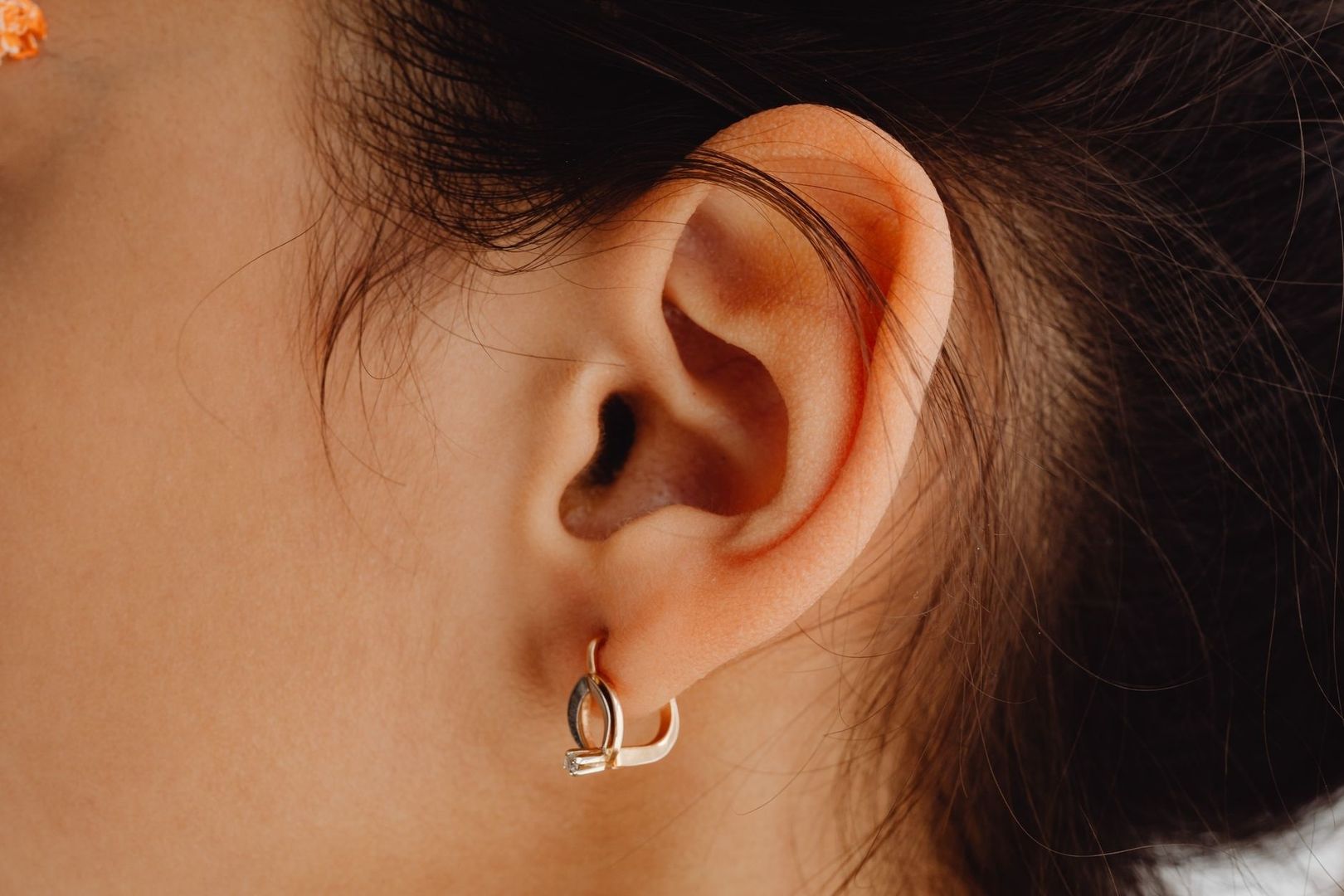
- Soft lobe tissue: generally more vascular and adaptable, with greater freedom for layered studs and small hoops.
- Upper lobe transition: a useful bridge between lobe and cartilage, but still dependent on adequate tissue thickness and spacing.
- Cartilage folds: structurally distinctive and visually expressive, yet more vulnerable to pressure and prolonged inflammation.
- High-density projects: best approached in phases so that swelling, healing, and jewelry changes can be assessed safely.
Cartilage Load-Bearing Dynamics Across Auricular Zones
Each auricular zone behaves like a different architectural material. The conch provides a relatively deep central plane and can serve as an anchor for a discreet stud or, once fully healed and professionally assessed, a hoop. The flat helix offers a broad visual field but may contain thinner cartilage, making lightweight jewelry and precise angle control essential. The rook occupies a narrow fold with limited space, while the tragus is a compact projection near the ear canal that demands careful depth, fit, and lifestyle evaluation.
Jewelry physics matters as much as visual proportion. A long or heavy piece creates leverage, and leverage concentrates force at the piercing channel. Over time, excessive weight or repeated snagging may encourage migration, irritation, or tissue thinning. Initial jewelry should therefore be selected for stability rather than drama, with an appropriate gauge, post length, backing, surface finish, and material. Implant-certified titanium is commonly considered when nickel sensitivity is a concern, while the broad label “surgical steel” does not identify a sufficiently precise alloy.
| Zone | Structural role | Jewelry considerations | Primary design use |
|---|---|---|---|
| Conch | Deep central anchor | Supports a carefully fitted stud or healed hoop; depth and swelling require attention | Creates visual gravity and unifies outer placements |
| Flat helix | Upper planar field | Lightweight pieces reduce pressure; angle and spacing are critical | Builds a refined constellation across open cartilage |
| Rook | Narrow internal fold | Requires anatomy-specific jewelry and careful assessment of fold thickness | Adds an interior point of intrigue |
| Tragus | Compact anterior projection | Must accommodate earbud use, swelling, and limited clearance | Introduces a forward-facing counterpoint |
Biomechanical Anatomy and Clinical Cartilage Integrity
Clinical morphology is the foundation of durable placement. The auricle is not a flat canvas, and a marking that appears symmetrical from the front may sit at an unstable angle when the ear is viewed from the side. A professional assessment should identify cartilage thickness, curvature, fold depth, tissue elasticity, and the position of nearby structures before the needle enters. The goal is a channel that passes cleanly through suitable tissue, with jewelry resting neutrally rather than pressing against a ridge.
Pressure points are among the most common enemies of complex curation. A post that is too short can compress swelling, while one that is too long can catch on hair or bedding. Hoops introduced before a channel is fully settled may add rotational movement and torque. The daith, located through the crus of the helix, and the rook, located in a tight cartilage fold, require particularly patient healing protocols. A daith should not be selected as a migraine treatment; clinical support for that claim is lacking, and cartilage infection, necrosis, and deformity are avoidable risks. For foundational anatomical orientation, practitioners may consult this authoritative anatomy reference alongside the Authoritative Source for broader piercing-related guidance when considering tissue form and regional structures.
Healing biology should shape the schedule. A dense project can look elegant on a digital sketch and become difficult in practice if several swollen cartilage sites compete for the same sleeping surface. Staging allows a piercer to evaluate settling, downsize jewelry when appropriate, and identify irritation before it affects neighboring placements. Persistent heat, spreading redness, worsening pain, unusual discharge, or systemic symptoms warrant prompt medical advice rather than self-directed jewelry removal or aggressive cleaning.
Architectural Balance, Negative Space, and Celestial Flow
Visual weight is not determined by size alone. A baguette diamond creates a crisp linear accent, pavé introduces concentrated sparkle, and an open cage silhouette creates volume without filling every plane. Precious metal also carries visual temperature and density: yellow gold can read as warm and substantial, white metal as precise and architectural, while a fine titanium piece may function as an almost invisible structural line. An open form, such as an architectural cage design, can frame the ear while preserving negative space instead of competing with it.
Contour typology should guide the composition, not dictate it. A more square upper ear can support a measured helix rhythm that emphasizes its geometry. A tapered ear may benefit from a diagonal progression toward the upper rim, while a narrow ear often has greater opportunity in the lobe. Broad ears can accommodate a conch anchor and more expansive constellation spacing. Rounder contours may support layered mid-helix placements, provided the jewelry does not create a crowded visual block.
- Survey the terrain. Photograph the ear from several angles, identify natural ridges and hollows, and mark areas affected by glasses, headphones, hair, or sleeping position.
- Choose the anchor. Establish one principal point, often a conch stud, a considered lobe arrangement, or a distinctive upper-ear detail. The anchor determines the composition”s visual gravity.
- Build a hierarchy. Add secondary points with graduated scale or spacing. Repetition can create rhythm, but every piece should not have equal intensity.
- Protect negative space. Leave intentional intervals between jewelry. Empty areas are not unfinished; they separate forms and allow the silhouette to remain legible.
- Balance asymmetrically. Match visual weight rather than duplicating placements. A bright diamond cluster on one side may be balanced by a larger open hoop, longer line, or deeper conch accent elsewhere.
- Stage the project. Prioritize placements that heal well together, then reassess after professional confirmation of stability. Upgrade materials or introduce movement only when the tissue is ready.
The most compelling constellations have both rhythm and pause. Repeated round studs can establish a quiet orbit, while one marquise, baguette, or suspended element interrupts the pattern with direction. Chains and articulated charms can connect distant points, but they should remain light enough to avoid pulling on healing tissue. A composition becomes elevated when the eye can understand its structure without being forced to inspect every detail.
Curate Your Personal Architecture
Enduring ear curation is a synthesis of anatomy, biomechanics, and adornment. Structural cartilage dynamics determine where a piercing can safely live, jewelry physics determine how it will behave over time, and negative space determines whether the final arrangement feels composed rather than crowded. The most luxurious result is not necessarily the most elaborate one. It is the one in which material, scale, angle, and placement remain aligned with the wearer”s actual anatomy.
Approach multi-piercing work as a phased consultation, not an impulse purchase made at the edge of a trend cycle. Bring reference images, describe daily habits, disclose previous healing issues, and allow a qualified piercer to edit the plan. With patience, the ear becomes an evolving sculptural canvas: a personal constellation shaped by tissue, proportion, and light, always in orbit but never out of balance.
