From High Seas to Lower Manhattan: The Constellation of Sailor Tattoos in Modern Urban Identity
Charting Skin Under Night Skies
Classic sailor tattoos are more than decorative relics of the waterfront. They form an enduring visual language of survival, memory, belonging, and protection, a compact system of symbols once carried across oceans and now worn throughout the city. The anchor, swallow, nautical star, and fully rigged ship were designed to hold meaning when words were scarce and conditions were uncertain. Their strength came from clarity. A bold outline could preserve a promise, mark a distance traveled, or serve as a private charm against forces beyond human control.
For sailors navigating open water, the night sky was both map and instrument. Celestial bodies offered orientation when coastlines disappeared, while ritual and superstition helped make danger psychologically manageable. That same impulse followed maritime workers into the port alleys of Lower Manhattan, where the Bowery, Chatham Square, and the East River waterfront became crucial stages in American tattoo history. Over time, esoteric nautical marks moved from shipboard custom into urban identity. Traditional maritime iconography became a modern badge of resilience, connecting historic harbor traditions with the pressure, pace, and reinvention of city life.
Superstition and the Compass Rose
In maritime culture, a tattoo could operate as a portable talisman. The nautical star suggested guidance and a safe return, its paired points recalling compass directions and the dependable geometry of navigation. The swallow often carried associations with homecoming, because the bird”s seasonal movement echoed a sailor”s hope of returning to familiar ground. Anchors represented stability, duty, and the ability to remain fixed when water, weather, and circumstance were constantly shifting.
These images were not simply selected from a menu of attractive designs. Traditional lore connected certain marks with experience, service, and distance. Accounts of sailor tattoos commonly describe tattoos as records of voyages, crossings, shipboard identity, and personal commitments. Some traditions associated particular images with crossing the equator, surviving dangerous passages, or completing significant stretches of sea travel. The exact customs varied across periods, fleets, and communities, but the underlying principle remained consistent: the body became a logbook, and the skin carried evidence that official records could not always express.
Understanding the deep lineage of naval folklore illuminates how ancient maritime rites, documented across extensive records of sailor tattoos, served as vital protective amulets. In hostile waters, symbolic orientation worked on two levels. A star could recall a navigational system, while also reassuring its wearer that direction remained possible. An anchor could commemorate a ship or port, while also creating a psychological image of steadiness. Protective body art thus became an early living archive, blending practical experience, spiritual belief, group identity, and visual style.
- Nautical star: guidance, direction, and the hope of finding a safe route home.
- Swallow: return, loyalty, endurance, and the completion of a journey.
- Anchor: stability, maritime service, commitment, and emotional grounding.
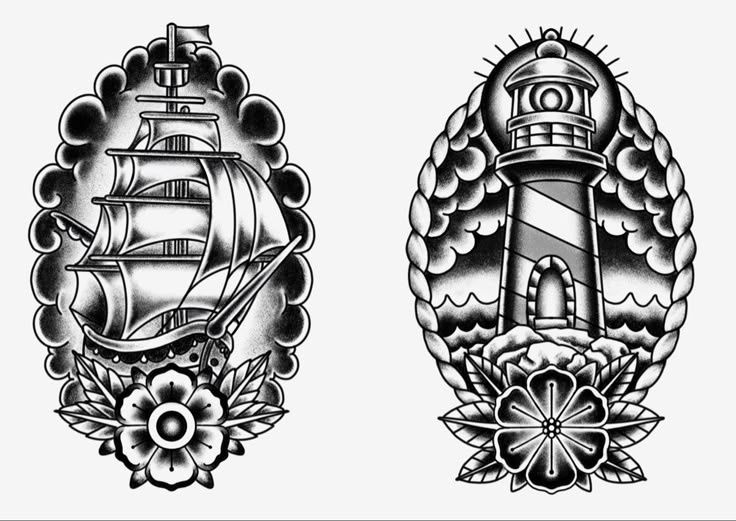
- Ship imagery: distance traveled, professional identity, risk, and the desire to master uncertain conditions.
Chatham Square and the Waterfront Forge
When maritime tattoo culture reached New York, it entered a city already shaped by movement, labor, immigration, commerce, and spectacle. Sailors arriving near the East River and the expanding waterfront created a steady clientele for tattooers. Historical accounts identify Martin Hildebrandt”s Manhattan business, established in 1870, as what is believed to have been the first U.S. tattoo business. By the 1880s, professional tattooists had multiplied along the waterfront and Bowery, where sailors were among the most important customers.
Chatham Square became particularly significant because it connected transportation, entertainment, working-class commerce, and waterfront traffic. Samuel O”Reilly”s studio is closely associated with the development of electric tattooing in New York. Thomas Edison had patented an electrical stencil-duplicating device, and O”Reilly adapted the underlying concept into a tattoo machine. The result accelerated the work, strengthened the visual consistency of outlines, and helped establish the bold graphic language now associated with American traditional tattooing.
Early tattooers often worked across several worlds at once. A practitioner might operate from a small storefront, serve sailors and soldiers, appear in a sideshow, and travel with a circus. Fred Clark, born Homer W. Chambers, represents this broader pattern as described in surviving tattoo-history accounts: after learning tattooing during U.S. Navy service in World War I, he worked as an artist and performer in the Midwest. His naval imagery, including battleships, flags, and eagles, reflects the close relationship between military experience, exhibition culture, and professional tattooing. New York”s industrial tempo sharpened these influences into flash designs that could be understood quickly and reproduced efficiently.
The Semiotics of Sea and Street
Classic flash survives because its symbols are unusually adaptable. A nineteenth-century sailor might choose an image to document a voyage, honor a ship, or invoke protection. A twenty-first-century New Yorker may select the same image to mark sobriety, migration, grief, professional reinvention, or the decision to remain steady under pressure. The design remains recognizable, but its emotional address changes with the wearer. In this migration from sea to street, the tattoo becomes less a credential of maritime service and more a personal constellation of lived experience.
That movement is central to the study of body modification. In contemporary cultural and material analyses, such as those examined in academic anthropology courses, symbols reveal how meaning travels between historic subcultures and modern spaces. Nautical imagery is especially effective because it already contains a vocabulary of movement and uncertainty. The ocean becomes a metaphor for the city, while the harbor becomes a model for arrival, departure, labor, and reinvention.
| Motif | Historic maritime intent | Contemporary urban significance |
|---|---|---|
| Nautical star | Navigation, orientation, and safe passage | Finding direction through personal or professional upheaval |
| Swallow | Return from sea, loyalty, and completed travel | Homecoming, persistence, and maintaining connection across distance |
| Pig and rooster | Protective symbols associated with survival after shipwreck, often imagined as unlikely flotation aids | Resourcefulness, humor under pressure, and refusing to be overwhelmed |
| Fully rigged ship | Voyage, maritime skill, distance, and service | Ambition, endurance, independence, and a life built through difficult passages |
The pig and rooster are particularly revealing because their force depends on paradox. As animals unable to swim, they became linked in popular maritime lore with the hope of surviving wreckage by being stored in buoyant containers. Whether treated as literal custom, folk explanation, or retrospective symbolism, the pairing carries a distinctly working-class wit. It acknowledges danger without surrendering to it. The fully rigged ship operates on a grander scale, presenting the body as a vessel of capability. In an urban context, it can mark the achievement of building a life amid unstable housing, demanding work, migration, or emotional weather.
Subterranean Years and the 1961 Ban
New York City”s relationship with tattooing changed sharply in 1961, when the Department of Health banned the practice following a hepatitis B outbreak. The prohibition lasted 36 years. The policy pushed tattooing away from visible storefronts and into private rooms, back areas, apartments, and other informal settings. Yet the ban did not erase the craft. Artists continued to work, clients continued to seek familiar imagery, and traditional flash remained in circulation through personal networks and underground practice.
The legal history also complicates the official narrative. According to the historical account presented by New York City Tourism around the New-York Historical Society exhibition “Tattooed New York,” the Health Department never documented a tattoo-transmitted hepatitis B case in New York City during the ban. That detail does not eliminate the public-health concerns of the period, but it demonstrates how regulation, fear, evidence, and cultural stigma can diverge. Tattooing became forbidden without becoming culturally absent.
When New York City legalized and regulated tattooing in 1997, the practice returned to a more visible civic and commercial life. Traditional Bowery flash, once associated with sailors, soldiers, sideshows, and illicit parlors, began to be treated as regional heritage. Museums, historical exhibitions, archives, and specialist collections helped preserve machines, photographs, designs, and stories that might otherwise have disappeared. The Bowery”s tattoo history is now documented through maps, tours, and institutional interpretation, while the city”s studios support an enormous range of styles. By 2017, New York had almost 300 tattoo shops, representing traditional American, Japanese, hand-poke, and other approaches.
- 1961: New York City banned tattooing after concerns connected to a hepatitis B outbreak.
- Underground period: Artists preserved techniques and flash imagery through private and illicit settings.
- 1997: The City Council legalized and regulated tattooing after the 36-year prohibition.
- Today: Historic motifs circulate through licensed studios, exhibitions, archives, and contemporary design culture.
Carrying the Constellation Forward
The lasting power of sailor tattoos lies in their ability to anchor the individual without freezing meaning in the past. A star still proposes direction, but direction may now mean choosing a career, leaving a destructive pattern, finding community, or moving through a city that constantly changes around you. An anchor still implies steadiness, but the ground it represents can be emotional rather than geographic. These symbols remain open enough to absorb new histories while retaining the visual authority of their maritime origins.
In New York, classic flash functions as permanent living folklore. It carries fragments of naval custom, waterfront labor, immigrant movement, technological invention, public controversy, and artistic persistence. Every new tattoo adds another layer to that archive. The sea has not disappeared from the imagery; it has become an inner landscape, a way to describe uncertainty and the discipline required to cross it. For anyone navigating modern identity, the old nautical archetypes remain remarkably aligned: look for a bearing, honor the distance already traveled, and carry a durable constellation into the next stretch of city night.
